-Vladyka Averky (Taushev) of blessed memory
Thursday, June 23, 2016
Blessed Seraphim Rose's Dream of Vladyka Averky
-Vladyka Averky (Taushev) of blessed memory


Friday, June 10, 2016
SUBSCRIBE TO THE NEW ORTHODOX WEBSITE "ORTHODOX ETHOS"
ANNOUNCING A NEW ORTHODOX WEBSITE: ORTHODOXETHOS.COM
We bring to the attention of all devout Orthodox Christians and sincere inquirers the launch of a new website dedicated to the Orthodox Way, Truth and Life: orthodoxethos.com.
The site will be primarily a source for going deeper into the Orthodox phronema and ethos, or mindset and way of being and living. Our focus will be both "orthodoxy" and the orthodox "ethos," these being inseparable. Given that the way (ethos), the truth (dogma) and the life (spiritual life) are one, Christ, our offering will touch on all of these and stress their unity.
Orthodox Ethos is a collective effort of nearly a dozen Orthodox Christians, ordained and lay. Original articles, translations of timely and important texts and the publications of Uncut Mountain Press are among the subject matter of our modest effort.
Our site will be unique in that we will focus on the connection between dogma and ethos, and attempt to assist the neophyte (especially) to acquire not only an Orthodox confession of faith but an Orthodox ethos. Also, in connection with the publication plan of Uncut Mountain Press, we will also focus on translations from Greek, including excerpts from those books now slated for publication (The Ecumenism Conference Proceedings and St. Gregory Plamas' On the Procession of the Holy Spirit) and also in the future, some of the works of Dr. Demetrios Tselingides.
We also have a special section dedicated to the Pan Orthodox Council.
The Editor of Orthodox Ethos is Fr. Peter Heers
Please come for a visit and sign up on our mailing list to be kept informed of our new articles, videos and comments.

We bring to the attention of all devout Orthodox Christians and sincere inquirers the launch of a new website dedicated to the Orthodox Way, Truth and Life: orthodoxethos.com.
The site will be primarily a source for going deeper into the Orthodox phronema and ethos, or mindset and way of being and living. Our focus will be both "orthodoxy" and the orthodox "ethos," these being inseparable. Given that the way (ethos), the truth (dogma) and the life (spiritual life) are one, Christ, our offering will touch on all of these and stress their unity.
Orthodox Ethos is a collective effort of nearly a dozen Orthodox Christians, ordained and lay. Original articles, translations of timely and important texts and the publications of Uncut Mountain Press are among the subject matter of our modest effort.
Our site will be unique in that we will focus on the connection between dogma and ethos, and attempt to assist the neophyte (especially) to acquire not only an Orthodox confession of faith but an Orthodox ethos. Also, in connection with the publication plan of Uncut Mountain Press, we will also focus on translations from Greek, including excerpts from those books now slated for publication (The Ecumenism Conference Proceedings and St. Gregory Plamas' On the Procession of the Holy Spirit) and also in the future, some of the works of Dr. Demetrios Tselingides.
We also have a special section dedicated to the Pan Orthodox Council.
The Editor of Orthodox Ethos is Fr. Peter Heers
Please come for a visit and sign up on our mailing list to be kept informed of our new articles, videos and comments.
WWW.OrthodoxEthos.com

Monday, June 6, 2016
THE UNDERGROUND CHURCH - IS IT COMING SOONER THAN YOU THINK?
Two Excellent Podcast Interviews with Fr. John Peck discussing the future of Christianity in America and how we must prepare by creating a house church movement!!!
Listen Here >>>
http://www.ancientfaith.com/podcasts/goforth/underground_church_part_1
http://www.ancientfaith.com/podcasts/goforth/fr._john_peck_the_underground_church_part_2

Listen Here >>>
http://www.ancientfaith.com/podcasts/goforth/underground_church_part_1
http://www.ancientfaith.com/podcasts/goforth/fr._john_peck_the_underground_church_part_2
Sunday, June 5, 2016
CONFESSIONS OF A JESUS FREAK
Check out this testimonial that will help you understand what it means to really be a Jesus Freak >>>
Click Here:
http://journeytoorthodoxy.com/2016/05/confessions-jesus-freak/

Click Here:
http://journeytoorthodoxy.com/2016/05/confessions-jesus-freak/

Saturday, June 4, 2016
Thursday, May 26, 2016

Monday, May 9, 2016
THE ORTHODOX CHURCH IS STANDING IN THE WAY OF THE NEW WORLD ORDER
Make The Effort to Read This Extremely Interesting Article So You May Understand what is Happening in the Earth. You Will NOT See or Hear This Truth on CNN or Fox News!!!
READ ARTICLE HERE >>>
http://www.pravoslavie.ru/81604.html

READ ARTICLE HERE >>>
http://www.pravoslavie.ru/81604.html
Thursday, May 5, 2016
ORTHODOX STATEMENT ON HOMOSEXUALITY - 1983
Orthodox Statement on Homosexuality
The position of the Orthodox Church toward homosexuality has been expressed by synodical canons and Patristic pronouncements beginning with the very first centuries of Orthodox ecclesiastical life.Thus, the Orthodox Church condemns unreservedly all expressions of personal sexual experience which prove contrary to the definite and unalterable function ascribed to sex by God's ordinance and expressed in man's experience as a law of nature.
Thus the function of the sexual organs of a man and a woman and their bio-chemical generating forces in glands and glandular secretions are ordained by nature to serve one particular purpose, the procreation of the human kind.
However, the human sexual apparatus appears to have been designed not only as the medium by which the necessary physical contact for the purpose of sex is affected, but as the generator as well and the center of a highly complex system of feelings which all together are known by the name eros, love between husband and wife.
Therefore, any and all uses of the human sex organs for purposes other than those ordained by creation, runs contrary to the nature of things as decreed by God and produces the following wrongs:
a. They violate God's ordinance regarding both the procreation of man and his emotional life generated by his instinctive attraction to the opposite sex not only for procreating but for advancing the personalities of a man and a woman to a state of completion within the association of the Sacrament of Marriage. For all this, homosexuality is an insult to God, and since it attempts to alter the laws regulating creation it is a blasphemy.
b. Homosexuality interferes with the normal development of societal patterns and as such it proves detrimental to all. These endangered patterns include personal values regarding sex which people normally take to be a vital part of their existence and a valuable asset to their living a normal life, esteemed by others.
c. The homosexual degrades his own sex and thus denies to himself the self-respect that is generated from the feeling that one is in line with God's creation.
Homosexuality appears to be of two kinds: physico-genetic and habitual. Physico-genetic homosexuality is of physical origin due to secretory abnormalities that may produce organic changes. This type of homosexuality is rather rare and is treated as any other medical disorder.
Habitual homosexuality may have more than one cause. All, however, point out to a moral failure at some stage of the individual's development, or to the animate environment from which the homosexual originated.
Thus, although homosexuality followed as a way of life by the sufferer, may be subject to psycho-pathological investigation and treatment, the origin of it, in all but the few physico-genetic cases mentioned above, brings with it a moral failure. It is because of the realization of this that homosexuality has been described from ancient times as a moral stigma.
Thus, the Orthodox Church cannot subscribe to the demand that homosexuals be recognized by society and its agencies as legal spouses and as deserving the same respect as men and women enjoy in the state of wedlock.
Society and its values, religious and societal, have legitimate claims over the behavior of its members, especially in so vital a function as the sexual one on which not only the survival but its quality as well depend. No one has the right to do whatever he wishes with his body and still claim recognition and respect on the part of society.
The Orthodox Church believes that homosexuality should be treated by society as an immoral and dangerous perversion and by religion as a sinful failure. In both cases, correction is called for. Homosexuals should be accorded the confidential medical and psychiatric facilities by which they can be helped to restore themselves to a self-respecting sexual identity that belongs to them by God's ordinance.
In full confidentiality, the Orthodox Church cares and provides pastorally for homosexuals in the belief that no sinner who has failed himself and God should be allowed to deteriorate morally and spiritually.
Psychiatric restoration, without religious direction and reconciliation with God, is bound to prove short lived.
A healthy society and various religions do not recognize perversions. Rather, they work to restore the homosexual to the status of a self-esteemed individual and thus to a valued instrument of their own survival and well-being under God.
ARTICLE BY FR. LAWRENCE FARLEY:
https://blogs.ancientfaith.com/nootherfoundation/little-history-lesson
Sunday, May 1, 2016
Saturday, April 30, 2016
A MESSAGE FOR WESTERN CHRISTIANS >>> SHOCKING
If you're a Western Christian, (Catholic, Lutheran, Baptist, Reformed,
etc...), then this will SHOCK you. Joseph P. Farrell discusses why one
of the greatest and most egregious errors in Western Christianity is the
concept of original sin. It is a thinly disguised form of social
engineering in the form of economics.
Wednesday, February 17, 2016
CHRISTIANITY or THE CHURCH by St Hilarion (Troitsky)
 Written in 1917 to a Protestant, St Hilarion explains the dangers of ecumenism. The book is read here by Patrick Barnes of www.OrthodoxInfo.com It is also here in a PDF version if you would rather read the text.
Click Here to listen or read St Hilarion's Thoughts on Ecumenism:
http://www.pravoslavie.ru/english/32129.htm
Tuesday, February 2, 2016
Wednesday, January 20, 2016
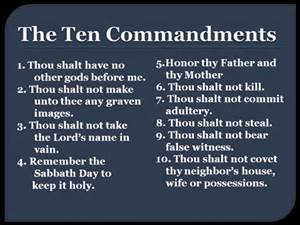
THE TEN COMMANDMENTS
A Beautiful Explanation of God Giving The Ten Commandments.
Receive the Word of the Lord here:
http://www.stjohntherussian.com/orthodoxy_ten_commandments.html
Receive the Word of the Lord here:
http://www.stjohntherussian.com/orthodoxy_ten_commandments.html
Saturday, December 12, 2015
BURIED and SEALED: THE BURIAL OF JESUS
Great article on all the details surrounding the burial of Jesus. He was buried because He actually was killed. But, GLORY TO GOD, He did not stay dead, because death could not hold Him. HE IS RISEN!!!

CLICK HERE:
http://www1.cbn.com/onlinediscipleship/buried-%26amp%3B-sealed%3A-jesus-in-the-tomb
CLICK HERE:
http://www1.cbn.com/onlinediscipleship/buried-%26amp%3B-sealed%3A-jesus-in-the-tomb
Thursday, December 10, 2015
WHAT IS NECESSARY FOR SALVATION?
 Thank you for your interest in my comment. The answer to your first question is "the chicken" according to Genesis chapter 1. The answer to your second question is "the church came after the first half of the Bible (OT) was written, but before the second half (NT) was written. So you can see that I do not deny history, but in fact, like to be precise in my history. The church was born on Pentecost, and the New Testament was written over the next several decades, but canonized centuries later. Of course "the Bible did not produce the church"; the Holy Spirit is the Person responsible for both the Church, and the Holy Scriptures. I am not a Protestant, I am an Orthodox Christian. But I am an Orthodox Christian who is concerned with the absence of the Gospel being preached. Before I make my point let me say I absolutely love the teaching ministry of Fr Josiah. I have probably listened to just about every podcast of his at Ancient Faith Radio, his videos on youtube, I have purchased many of his teachings from Patristic Nectar, own his books, and have listened to the "Rock and Sand" interviews at least twice in their entirety. The point I am making in my comment above is that Jesus is our Savior, belonging to a church does not save you. Of course a true Orthodox Church possesses the Gospel. Once a person is a believer in Jesus they are added to the church (the Orthodox Church). I know an Orthodox priest who has succeeded for 28 years to not preach the Gospel of Jesus Christ, but instead promotes his New Age beliefs, and promotes New Age/Buddhist books in all his counseling, catechism, and sermons. So being in an Orthodox Church does not guarantee that a person is hearing the Gospel preached. When we go into the world Jesus says we are to preach the Gospel (Mark 16:15). St Paul says "Christ sent me not to baptize, but to preach the Gospel (1 Cor. 1:17-24). St Paul over and over referenced "the preaching of the Gospel" as his mission and purpose, never "the preaching of the church".(1 Thes. 1:5-10; Col. 1:5, 6; Romans 1:16; 2 Timothy 1:8-10; 1 Cor. 15:1-4. Of course the church is the body of Christ, of which we are members in particular (1 Cor. 12:27), the church is the pillar and ground of the truth (1 Timothy 3:15), and the church, which Jesus said He would build, would never be overcome by the powers of hell (Mt. 16:18). I am an Orthodox Christian striving for an Orthodox mindset, but is it possible that what is passing for Orthodox Christianity nowadays is over-simplified. I am not speaking of Fr. Josiah whom I esteem highly in the Lord. Though I do question him on the above point, and hope by doing so to inspire thoughtfulness concerning "the preaching of the Gospel". J.M., your broad view of the Gospel may be accurate in general terms, but according to St Paul and the Orthodox Church we are told what the Gospel is: "I declare unto you the gospel which I preached unto you, which also you have received, and wherein you stand; By which also you are saved, if you keep in memory what I preached unto you, unless you have believed in vain. For I delivered unto you first of all that which I also received, how that Christ died for our sins according to the scriptures; And that he was buried. and that he rose again the third day according to the scriptures". (1 Cor. 15:1-4) And finally, I did not accuse Fr. Josiah of not being orthodox. I am simply making the point that the Gospel is the prime mover for salvation. Yes it, the gospel, can be found in an Orthodox church, but it, the gospel, is found wherever Jesus Christ is proclaimed, and that is where salvation is. I humbly submit these words to those who read them. I only long for the truth of Jesus Christ to be proclaimed in the Orthodox Church and all the world. I ask, "What is necessary for salvation"?
Saturday, November 28, 2015
WHY THE "HOLY AND GREAT SYNOD" OF THE ORTHODOX CHURCH SHOULD NOT CONVENE

PLEASE CHECK OUT THIS EYE-OPENING BLOG POST BY AN ORTHODOX PRIEST EXPLAINING THE NEAR FUTURE CATACLYSMIC POSSIBILITIES COMING TO THE ORTHODOX CHURCH. IS A RIFT COMING TO WORLD ORTHODOXY?
CLICK HERE:
http://www.orthodoxwitness.org/why-the-holy-and-great-synod-of-the-orthodox-church-should-not-convene/

Monday, November 23, 2015
UNDERSTANDING HOLY COMMUNION
Was the Mystical Supper a Passover Meal?
The Divine Liturgy did not appear ex nihilo (out of nothing). It came from somewhere. The question is, from where? Its origins are traced in the Jewish worship of the day, but which worship? Specifically the question often asked is: Was the Mystical (Last) Supper a seder (a Passover meal) or a chabûrah (a friendship meal)? There is a short and a long answer. The short answer is, neither! The long answer follows. But first, an explanation: What is a seder meal, and what is a chabûrah meal? A seder is a Passover supper the Jews had on the anniversary of the Passover, to commemorate the passage of the angel of death over the homes of the Jews, leaving unharmed their first-born, and destroying every first-born of the Egyptians, from their children to their animals (see Ex. ch. 12). The chabûrah meal, on the other hand, was a formal supper, at which friends and relatives gathered, usually bringing their contribution—similar to our pot-luck meals, but very formal.
The Divine Eucharist was instituted by our Lord, God and Savior Jesus Christ, on the night before His Passion (that is His suffering). The events are narrated in all four gospels. According to the scholars, the three synoptic gospels clearly show that the Lord had a Passover meal with His disciples, because they narrate the meal as taking place on the night of the “unleavened bread” (Mt. 26:17, Mk. 14:12, Lk. 22:7). Also the synoptic writers mention repeatedly (three times each!) that the meal they were going to prepare was a “Passover” meal, and even the Lord Himself says, “I have earnestly desired to eat this Passover with you before I suffer” (Lk. 22:15). Besides, there were some signs of a seder supper of Passover present, like the breaking of bread and the drinking of the Cup. It would therefore seem beyond question that they must have had a Passover meal in mind. However, there is more to consider.
In the first place, it is very obvious that this meal could not have been a seder, a Passover meal, because it took place not on Friday evening, the beginning of the Jewish Sabbath, but on Thursday evening. This is clear from the narratives of the holy Evangelists Matthew and Mark. They both place it on the night of the Lord’s betrayal and arrest, because they both say that after the meal “when they had sung a hymn, they went out to the Mount of Olives” (Mt. 26:30, Mk. 14:26) where the arrest took place (Mt. 26:50, Mk. 14:46). The Lord had dismissed Judas, saying to him, “What you are going to do, do quickly” (John 13:27). “He immediately went out; and it was night” (John 13:30). Later on he appeared with the soldiers for the arrest (John 18:3). On the following day, Friday, “when day came… they led Him away to their council” (Lk. 22:66). St. John the Evangelist notes that the Jews who led the Lord from Caiaphas to the praetorium did not want to go in, “so that they might not be defiled, but might eat the Passover” (John 18:28). St. John even marks the day and the time the Lord appeared before Pilate: “It was the day of Preparation of the Passover; it was about the sixth hour” (John 19:14). They then rushed to crucify and bury the Lord Jesus, because of the impending Passover (see John 19:31 and 42).
How then are we to explain the specific mention that the Mystical Supper took place “on the first day of Unleavened Bread”? (Mt. 26:17, Mk. 4:12). The erudite and holy Archbishop Theophylact of Bulgaria solves this issue, saying that, “‘The first day of Unleavened Bread’ means Thursday, the day before the feast of Unleavened Bread. For the unleavened bread was eaten on Friday.” This explanation is confirmed by the learned Archimandrite Kallinicos, who also quotes a Christian scholar of Jewish descent, to the effect that since the people began the preparations of collecting the bread and preparing the unleavened bread, it was called the first day of unleavened bread. Another Western scholar writes, “The reasonable conclusion is, that, in a popular way of speaking, a day before the legal day had acquired the name of ‘First day of Azyma’ and not unfitly, if on that day early arrangements were commenced for the complete exclusion of leaven from the houses.”
Consider also the following: many preparations were made for the Mystical Supper, but no mention is anywhere made of any lamb. It does not seem that they had the traditional and mandatory lamb for a Passover meal. How could they, since no lambs were allowed to be slaughtered on the day before the Passover. In addition the disciples were not a household (Ex. 12:4), so they did not qualify to share a lamb together, which had to be eaten by a single family, or perhaps shared with another family (Ex. 12:4). A further consideration is that they did not have the prescribed topic of conversation, which was supposed to be about the (historic) deliverance of Israel by God from the bondage of slavery in Egypt (Ex. 12:26-27). All these elements surrounding this meal (including the artos eaten, mentioned above) point to the conclusion that this was not a typical Passover meal. Was then the Mystical Supper a chabûrah meal? Hardly. The sacrificial language used, the talk about a broken body… and poured out blood, are not becoming for a friendly meal. Also the talk about a Covenant has no place with such meal either. Both the talk and the action of eating Christ’s broken body, and drinking His poured out blood, were totally out of place in such a meal. If anything, these elements were signs of a Passover meal: the blood (Ex. 12:13), the Covenant (Ex. 12:14), and the prescription to keep a memorial of it (Ex. 12:14.24), belonged to a Passover meal. Confusing? Understandably so, since this meal was neither a seder nor a chabûrah. What was it then?
The Lord’s Supper was a startling new kind of meal, because the food He offered in its course was something totally new under the sun. Indeed it was a Passover meal: not the old Passover, but the new Passover. “Our Lord Himself took a specific Jewish worship practice, one that had been revealed by God, filled it with the new meaning of the New Covenant, and transformed it into Christian communion. He had become The Passover Lamb, ready to be sacrificed for the deliverance of God’s creation.” In this new Passover the sacrificial lamb was the Lord Himself, a “lamb without blemish” (Ex. 12:5), the fulfillment of the Law and the Prophets. Christ and His disciples, down to us, constitute the new family, which the Lord called “His Church” (Mt. 16:18). The meal instituted, and its remembrance, was that of a new Passover, by which man is delivered from the slavery of evil, ignorance, sin, the devil, and death. The bread they ate was the new “bread of life which came down from heaven” (John 6:53). The wine they drank was the new wine Christ would drink with them again “new in the Kingdom of God,” after His Resurrection.
Christ and His disciples were not following the Old Covenant (Ex. 24:1-8), which was a memorial of the deliverance of their ancestors from Egypt, but, as Christ had foretold (Jer. 31:31-34), they were following “the New Covenant” (1 Cor. 11:25), by which He made the Old Covenant obsolete (Heb. 8:13). Christ based His New Covenant, His new relationship with men, in His blood, which became “the new and living way” (Heb. 10:20). He shed His blood out of His love for man. Therefore the New Covenant is based on love. Christ died on the Cross for us. “Greater love has no man than this, that a man lay down his life for his friends” (John 15:13). This we proclaim at the celebration of every Divine Eucharist. Christianity is the new religion that needs new ministers: “new wine is for fresh skins” (Mk. 2:22. cf. Lk. 5:38). The new Faith calls for a new form of worship, a new kind of sacrifice, offered on the first day of the week, which for the Jews memorialized the first day of creation. The Lord’s Day “is a Christian institution,” in which we memorialize the new “day which the Lord has made” (Ps. 117(118):24), the day of our re-creation. On this day we celebrate “the miracle and the mystery of the new life” lived by the community that bears His name. Indeed “old things have passed away; behold all things have become new” (2 Cor. 5:17).
Original source of above article: http://orthodoxwitness.org/was-the-mystical-supper-a-passover-meal/
Monday, November 9, 2015
Subscribe to:
Posts (Atom)