Wednesday, February 17, 2016

CHRISTIANITY or THE CHURCH by St Hilarion (Troitsky)

Written in 1917 to a Protestant, St Hilarion explains the dangers of ecumenism. The book is read here by Patrick Barnes of www.OrthodoxInfo.com It is also here in a PDF version if you would rather read the text.


Click Here to listen or read St Hilarion's Thoughts on Ecumenism:
http://www.pravoslavie.ru/english/32129.htm

Wednesday, January 20, 2016

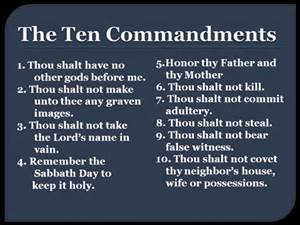
THE TEN COMMANDMENTS

A Beautiful Explanation of God Giving The Ten Commandments.


Receive the Word of the Lord here:
http://www.stjohntherussian.com/orthodoxy_ten_commandments.html

Saturday, December 12, 2015

BURIED and SEALED: THE BURIAL OF JESUS

Great article on all the details surrounding the burial of Jesus. He was buried because He actually was killed. But, GLORY TO GOD, He did not stay dead, because death could not hold Him. HE IS RISEN!!!


CLICK HERE:
http://www1.cbn.com/onlinediscipleship/buried-%26amp%3B-sealed%3A-jesus-in-the-tomb

Thursday, December 10, 2015

WHAT IS NECESSARY FOR SALVATION?


Thank you for your interest in my comment. The answer to your first question is "the chicken" according to Genesis chapter 1. The answer to your second question is "the church came after the first half of the Bible (OT) was written, but before the second half (NT) was written. So you can see that I do not deny history, but in fact, like to be precise in my history. The church was born on Pentecost, and the New Testament was written over the next several decades, but canonized centuries later. Of course "the Bible did not produce the church"; the Holy Spirit is the Person responsible for both the Church, and the Holy Scriptures. I am not a Protestant, I am an Orthodox Christian. But I am an Orthodox Christian who is concerned with the absence of the Gospel being preached. Before I make my point let me say I absolutely love the teaching ministry of Fr Josiah. I have probably listened to just about every podcast of his at Ancient Faith Radio, his videos on youtube, I have purchased many of his teachings from Patristic Nectar, own his books, and have listened to the "Rock and Sand" interviews at least twice in their entirety. The point I am making in my comment above is that Jesus is our Savior, belonging to a church does not save you. Of course a true Orthodox Church possesses the Gospel. Once a person is a believer in Jesus they are added to the church (the Orthodox Church). I know an Orthodox priest who has succeeded for 28 years to not preach the Gospel of Jesus Christ, but instead promotes his New Age beliefs, and promotes New Age/Buddhist books in all his counseling, catechism, and sermons. So being in an Orthodox Church does not guarantee that a person is hearing the Gospel preached. When we go into the world Jesus says we are to preach the Gospel (Mark 16:15). St Paul says "Christ sent me not to baptize, but to preach the Gospel (1 Cor. 1:17-24). St Paul over and over referenced "the preaching of the Gospel" as his mission and purpose, never "the preaching of the church".(1 Thes. 1:5-10; Col. 1:5, 6; Romans 1:16; 2 Timothy 1:8-10; 1 Cor. 15:1-4. Of course the church is the body of Christ, of which we are members in particular (1 Cor. 12:27), the church is the pillar and ground of the truth (1 Timothy 3:15), and the church, which Jesus said He would build, would never be overcome by the powers of hell (Mt. 16:18). I am an Orthodox Christian striving for an Orthodox mindset, but is it possible that what is passing for Orthodox Christianity nowadays is over-simplified. I am not speaking of Fr. Josiah whom I esteem highly in the Lord. Though I do question him on the above point, and hope by doing so to inspire thoughtfulness concerning "the preaching of the Gospel". J.M., your broad view of the Gospel may be accurate in general terms, but according to St Paul and the Orthodox Church we are told what the Gospel is: "I declare unto you the gospel which I preached unto you, which also you have received, and wherein you stand; By which also you are saved, if you keep in memory what I preached unto you, unless you have believed in vain. For I delivered unto you first of all that which I also received, how that Christ died for our sins according to the scriptures; And that he was buried. and that he rose again the third day according to the scriptures". (1 Cor. 15:1-4) And finally, I did not accuse Fr. Josiah of not being orthodox. I am simply making the point that the Gospel is the prime mover for salvation. Yes it, the gospel, can be found in an Orthodox church, but it, the gospel, is found wherever Jesus Christ is proclaimed, and that is where salvation is. I humbly submit these words to those who read them. I only long for the truth of Jesus Christ to be proclaimed in the Orthodox Church and all the world. I ask, "What is necessary for salvation"?

Saturday, November 28, 2015

WHY THE "HOLY AND GREAT SYNOD" OF THE ORTHODOX CHURCH SHOULD NOT CONVENE


PLEASE CHECK OUT THIS EYE-OPENING BLOG POST BY AN ORTHODOX PRIEST EXPLAINING THE NEAR FUTURE CATACLYSMIC POSSIBILITIES COMING TO THE ORTHODOX CHURCH. IS A RIFT COMING TO WORLD ORTHODOXY?                                       

CLICK HERE:
http://www.orthodoxwitness.org/why-the-holy-and-great-synod-of-the-orthodox-church-should-not-convene/

Monday, November 23, 2015

UNDERSTANDING HOLY COMMUNION

Was the Mystical Supper a Passover Meal?


The Divine Liturgy did not appear ex nihilo (out of nothing). It came from somewhere. The question is, from where? Its origins are traced in the Jewish worship of the day, but which worship? Specifically the question often asked is: Was the Mystical (Last) Supper a seder (a Passover meal) or a chabĂ»rah (a friendship meal)? There is a short and a long answer. The short answer is, neither! The long answer follows. But first, an explanation: What is a seder meal, and what is a chabĂ»rah meal? A seder is a Passover supper the Jews had on the anniversary of the Passover, to commemorate the passage of the angel of death over the homes of the Jews, leaving unharmed their first-born, and destroying every first-born of the Egyptians, from their children to their animals (see Ex. ch. 12). The chabĂ»rah meal, on the other hand, was a formal supper, at which friends and relatives gathered, usually bringing their contribution—similar to our pot-luck meals, but very formal.
The Mystical Supper could not have been a Passover meal because the bread used was not unleavened (azyma), but leavened (artos). However, the question, “Which kind of bread was used at the Mystical Supper,” may or may not be settled by this simple, matter-of-fact statement. The question, “What kind of meal was the one that gave origin to the Eucharistic meal,” requires some further studying. We narrow this study to point out the newness of “the Lord’s Supper” (1 Cor. 11:20), and the elements in it that set it apart from anything else that preceded it and resembles it.
The Divine Eucharist was instituted by our Lord, God and Savior Jesus Christ, on the night before His Passion (that is His suffering). The events are narrated in all four gospels. According to the scholars, the three synoptic gospels clearly show that the Lord had a Passover meal with His disciples, because they narrate the meal as taking place on the night of the “unleavened bread” (Mt. 26:17, Mk. 14:12, Lk. 22:7). Also the synoptic writers mention repeatedly (three times each!) that the meal they were going to prepare was a “Passover” meal, and even the Lord Himself says, “I have earnestly desired to eat this Passover with you before I suffer” (Lk. 22:15). Besides, there were some signs of a seder supper of Passover present, like the breaking of bread and the drinking of the Cup. It would therefore seem beyond question that they must have had a Passover meal in mind. However, there is more to consider.
In the first place, it is very obvious that this meal could not have been a seder, a Passover meal, because it took place not on Friday evening, the beginning of the Jewish Sabbath, but on Thursday evening. This is clear from the narratives of the holy Evangelists Matthew and Mark. They both place it on the night of the Lord’s betrayal and arrest, because they both say that after the meal “when they had sung a hymn, they went out to the Mount of Olives” (Mt. 26:30, Mk. 14:26) where the arrest took place (Mt. 26:50, Mk. 14:46). The Lord had dismissed Judas, saying to him, “What you are going to do, do quickly” (John 13:27). “He immediately went out; and it was night” (John 13:30). Later on he appeared with the soldiers for the arrest (John 18:3). On the following day, Friday, “when day came… they led Him away to their council” (Lk. 22:66). St. John the Evangelist notes that the Jews who led the Lord from Caiaphas to the praetorium did not want to go in, “so that they might not be defiled, but might eat the Passover” (John 18:28). St. John even marks the day and the time the Lord appeared before Pilate: “It was the day of Preparation of the Passover; it was about the sixth hour” (John 19:14). They then rushed to crucify and bury the Lord Jesus, because of the impending Passover (see John 19:31 and 42).
How then are we to explain the specific mention that the Mystical Supper took place “on the first day of Unleavened Bread”? (Mt. 26:17, Mk. 4:12). The erudite and holy Archbishop Theophylact of Bulgaria solves this issue, saying that, “‘The first day of Unleavened Bread’ means Thursday, the day before the feast of Unleavened Bread. For the unleavened bread was eaten on Friday.” This explanation is confirmed by the learned Archimandrite Kallinicos, who also quotes a Christian scholar of Jewish descent, to the effect that since the people began the preparations of collecting the bread and preparing the unleavened bread, it was called the first day of unleavened bread. Another Western scholar writes, “The reasonable conclusion is, that, in a popular way of speaking, a day before the legal day had acquired the name of ‘First day of Azyma’ and not unfitly, if on that day early arrangements were commenced for the complete exclusion of leaven from the houses.”
Consider also the following: many preparations were made for the Mystical Supper, but no mention is anywhere made of any lamb. It does not seem that they had the traditional and mandatory lamb for a Passover meal. How could they, since no lambs were allowed to be slaughtered on the day before the Passover. In addition the disciples were not a household (Ex. 12:4), so they did not qualify to share a lamb together, which had to be eaten by a single family, or perhaps shared with another family (Ex. 12:4). A further consideration is that they did not have the prescribed topic of conversation, which was supposed to be about the (historic) deliverance of Israel by God from the bondage of slavery in Egypt (Ex. 12:26-27). All these elements surrounding this meal (including the artos eaten, mentioned above) point to the conclusion that this was not a typical Passover meal. Was then the Mystical Supper a chabĂ»rah meal? Hardly. The sacrificial language used, the talk about a broken body… and poured out blood, are not becoming for a friendly meal. Also the talk about a Covenant has no place with such meal either. Both the talk and the action of eating Christ’s broken body, and drinking His poured out blood, were totally out of place in such a meal. If anything, these elements were signs of a Passover meal: the blood (Ex. 12:13), the Covenant (Ex. 12:14), and the prescription to keep a memorial of it (Ex. 12:14.24), belonged to a Passover meal. Confusing? Understandably so, since this meal was neither a seder nor a chabĂ»rah. What was it then?
The Lord’s Supper was a startling new kind of meal, because the food He offered in its course was something totally new under the sun. Indeed it was a Passover meal: not the old Passover, but the new Passover. “Our Lord Himself took a specific Jewish worship practice, one that had been revealed by God, filled it with the new meaning of the New Covenant, and transformed it into Christian communion. He had become The Passover Lamb, ready to be sacrificed for the deliverance of God’s creation.” In this new Passover the sacrificial lamb was the Lord Himself, a “lamb without blemish” (Ex. 12:5), the fulfillment of the Law and the Prophets. Christ and His disciples, down to us, constitute the new family, which the Lord called “His Church” (Mt. 16:18). The meal instituted, and its remembrance, was that of a new Passover, by which man is delivered from the slavery of evil, ignorance, sin, the devil, and death. The bread they ate was the new “bread of life which came down from heaven” (John 6:53). The wine they drank was the new wine Christ would drink with them again “new in the Kingdom of God,” after His Resurrection.
Christ and His disciples were not following the Old Covenant (Ex. 24:1-8), which was a memorial of the deliverance of their ancestors from Egypt, but, as Christ had foretold (Jer. 31:31-34), they were following “the New Covenant” (1 Cor. 11:25), by which He made the Old Covenant obsolete (Heb. 8:13). Christ based His New Covenant, His new relationship with men, in His blood, which became “the new and living way” (Heb. 10:20). He shed His blood out of His love for man. Therefore the New Covenant is based on love. Christ died on the Cross for us. “Greater love has no man than this, that a man lay down his life for his friends” (John 15:13). This we proclaim at the celebration of every Divine Eucharist. Christianity is the new religion that needs new ministers: “new wine is for fresh skins” (Mk. 2:22. cf. Lk. 5:38). The new Faith calls for a new form of worship, a new kind of sacrifice, offered on the first day of the week, which for the Jews memorialized the first day of creation. The Lord’s Day “is a Christian institution,” in which we memorialize the new “day which the Lord has made” (Ps. 117(118):24), the day of our re-creation. On this day we celebrate “the miracle and the mystery of the new life” lived by the community that bears His name. Indeed “old things have passed away; behold all things have become new” (2 Cor. 5:17).

Original source of above article: http://orthodoxwitness.org/was-the-mystical-supper-a-passover-meal/ 

Tuesday, July 7, 2015

PETER'S THEOLOGY OF THE ATONEMENT

Peter’s Theology of the Atonement
Father Pat's Pastoral Ponderings
When we consider the oral tradition that preceded the writing of the Gospels, it is essential to consider its personal quality; only a few individuals were able to speak to the ministry and teaching of Jesus with recognized authority: the Apostles whom he had chosen. The Evangelists, in their composition, did not draw on rootless sources and anonymous testimonies. The canonical collectors, the men who gathered these writings into an authoritative corpus, were certain that each of the Gospels rested on the personal witness of one of the Twelve. In Mark, for instance, they knew they were dealing with Peter.
St. Peter - Russian Mosaic
This is the reason we should study Peter's theology of the Atonement in conjunction with our examination of Mark. For now, two texts will suffice:
Writing of the Passion of Christ, Saint Peter declared, "It is better to suffer for doing good-if God's will so determines-than for doing evil. For also Christ suffered once for sins, a just man for unjust people, in order that he might bring you to God, being slain in the flesh but enlivened in the Spirit . . ." (1 Peter 3:18).
Several points in this compact text merit particular reflection:
First, Peter introduces this imagery for an exhortatory purpose; he is holding up Jesus as a moral example Christians are to follow. The immediate context discloses this purpose; in the preceding verses he tells his readers to be always ready to provide a "defense to everyone who asks you a reason for the hope that is in you, with meekness and fear; having a good conscience, that when they defame you as evildoers, those who revile your good conduct in Christ may be ashamed" (3:15-16).
Second, Peter's allusions to Isaiah 53 in this place are unmistakable. The prophet had written: "The Lord handed him over for our sins (paredoken avton tais hamatiais hemon). . .For the transgressions of my people he was led unto death" (Isaiah 53:6 & 8 LXX).
Third, in appealing to soteriological meaning of the Isaian text, Peter describes Jesus' own intention: "He suffered . . . in order . . ."—-apethanen . . . hina." That is to say, our access to God, according to Peter, was not simply the result of Jesus' suffering but its deliberate reason. The atonement was not only the objective purpose (telos) effected by Jesus suffering; it was also his subjective intention, his deliberate aim (skopos), in so suffering. The fulfillment of the Isaian prophecy was not only something Jesus did; it is something he had in mind to do.
This is a precious testimony, inasmuch as Peter was a witness to the thoughts and sentiments Jesus expressed during the period leading immediately up to his death, the timeframe indicated in the second half of Mark's Gospel. Peter heard each of the Lord's prophecies of the Passion.
Fourth, according to Peter the atoning work of Christ included, not only the removal of sins, but also a positive access to God. According to Peter, Jesus brings (prosagage) us to God.
With respect to the same Isaian prophecy, another passage in 1 Peter is more detailed and certainly more explicit: "Christ suffered for you, leaving you an example, that you should follow his steps, ‘who did not sin, nor was deceit found in his mouth’; who, when he was reviled, did not revile in return; when he suffered, he did not threaten, but committed himself to Him who judges righteously; who himself bore our sins in his own body on the tree, that we, having died to sins, might live for righteousness—-by his wounding you were healed" (2:21-24).
Once again, certain observations are in order:
First, Peter's intention, is exhortatory; he appeals to the sufferings of Christ by way of providing a practical example to his readers how they are to follow in his steps. Peter's intention is conveyed in the immediately preceding verses: "For what sort of credit is there if you bear it patiently when you are beaten for your faults? If, however, you endure it when you do good and still suffer, this is pleasing to God. For to this you have been called, because also Christ suffered for you . . ." (2:20-21).
Second, the reference to Isaian prophecy is indicated, not only by a verbal similarity, but also by a direct quotation: "he did not sin, nor was deceit found in his mouth" (Isaiah 53:9 (XX).
Third, Peter's direct quotation is surrounded with other echoes of Isaiah 53. For instance, his assertion, "by his wounding you were healed," is a near quotation of Isaiah 53:5, "by his wounding we have been healed" (Isaiah 53:5).

Fr. Patrick Henry Reardon is pastor of All Saints Antiochian Orthodox Church in Chicago, Illinois, and a Senior Editor of Touchstone: A Journal of Mere Christianity.
Subscribe to Pastoral Ponderings — Fr. Reardon's weekly essay.
Read past essays and listen to podcasts by Fr. Reardon.

Friday, July 3, 2015

THE ORTHODOXNET BLOG

SIMPLY "TONS" OF EYE-OPENING ARTICLES THAT RELATE OUR ORTHODOX FAITH TO "WHAT'S HAPPENING NOW IN OUR WORLD"!!!

During times of universal deceit, telling the truth becomes a revolutionary act" - George Orwell


Thursday, July 2, 2015

PEMPTOUSIA

Here are some really great interviews and information!
 
Mount Athos - Wisdom - Holiness


Friday, May 29, 2015

"REBELLION AGAINST GOD'S CREATED ORDER"

Texas Orthodox Clergy Speak Out on Gay Marriage and the “Rebellion Against God’s Created Order”

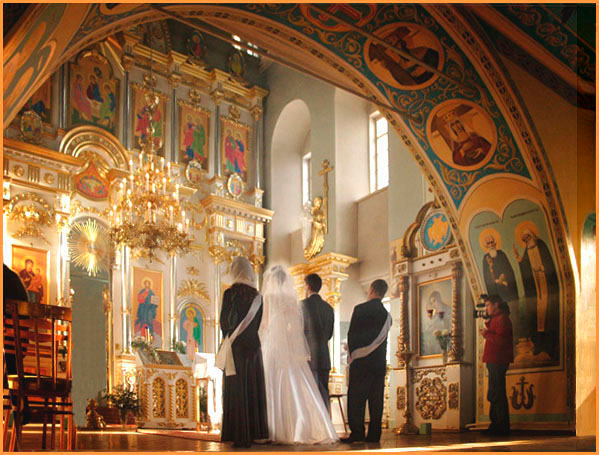
Russian Orthodox Wedding

Gay Marriage and the Houston Gay Rights Ordinance

Source: Orthodox Clergy Association of Houston and Southeast Texas
We, the Orthodox clergy of Houston and Southeast Texas, are compelled by our responsibilities before God to speak out plainly against the rebellion against God’s created order that we see being waged on both the local and national level.
It is God who created the two sexes, and established marriage at the time of creation, as our Lord Jesus Christ tells us:
But from the beginning of the creation God made them male and female. For this cause shall a man leave his father and mother, and cleave to his wife; and the two shall become one flesh. So they are no longer two but one flesh.What therefore God hath joined together, let not man put asunder (Mark 10:6-10; cf. Genesis 1:27; 2:24; 5:2).
The so called “Houston Equal Rights Ordinance,” is nothing of the sort; but rather gives a man who wishes to consider himself a woman, on a given day, the right to use women’s restrooms in the city of Houston. Such a man need not have even had a “sex change” operation, or even dress like a woman, since “gender” is considered to be a state of the mind rather than a biological fact. After the City council approved this unjust law, Christians of all races, denominations, and political affiliations organized a petition drive, which resulted in far more than the required number of signatures to get the issue on the ballot. But Mayor Annise Parker, disregarding the law, simply chose to disregard the will of the people and their right to vote in accordance with the law. She also used the occasion to unconstitutionally subpoena the sermons and private pastoral correspondences of pastors who were not even a party to a lawsuit that is seeking to force the Mayor to simply obey the law and allow the citizens of the city of Houston their right to vote. We wish to express our support for the fight against this unjust law, and the unlawful actions of Mayor Annise Parker, and we call upon her to cease ignoring the will of the people — which she clearly knows does not support her actions, or else she would not fear leaving the matter to them.

The question of “gay marriage” is also before the Supreme Court, and it is feared that they will impose “gay marriage” on the entire United States. We want our parishioners, fellow citizens, political leaders, and our nation’s judges to know that if this is done, it will be a violation of the letter and the spirit of the United States Constitution. More importantly, it will be an act of rebellion against “the Laws of Nature and of Nature’s God.” We have laws respecting marriage because only heterosexual relationships are capable of producing children, and those children are best provided for and properly raised within the context of traditional marriage. Homosexual relationships cannot possibly produce children, and so cannot possibly fit the meaning of the word “marriage,” neither should the state concern itself with recognizing such relationships. Homosexual couples also cannot provide both a mother and a father to a child, and so should not be allowed to adopt children.
The Declaration of Independence correctly states that our rights come from God, not from the state. The state can either justly protect those rights, or unjustly violate them. No government, much less an unelected court, can justly proclaim something to be a right which violates God’s natural order. The only way society can accommodate the demands of homosexual activists to call their relationships “marriage” and to allow everyone to pick which restroom they desire, is to ignore that men and women are different and have unique characteristics, and to pretend that there is no difference between a mother and a father. This can only be accomplished if we all deny that which we know to be true, and “suppress the truth in unrighteousness” (Romans 1:18).
Let it be known that we will never recognize such laws or judicial decrees to be either right or just, nor will we be intimidated into silence, but will continue to obey God rather than men (Acts 5:29), and proclaim the whole council of God on these issues (Acts 20:27).
Signed:
V. Rev. Fr. Serge Veselinovich, Ss. Constantine and Helen Serbian Orthodox Church, Galveston, Texas
V. Rev. Fr. Dejan Tiosavljevic, St. Sava Serbian Orthodox Church, Cypress, Texas
V. Rev. Fr. Gabriel Karam, Holy Forty Martyrs Antiochian Orthodox Church, Sugarland, Texas
V. Rev. Fr. Joseph Huneycutt, St. Joseph Antiochian Orthodox Church, Houston, Texas
V. Rev, Fr. Anastasios Raptis, St. Basil Greek Orthodox Church, Houston, Texas
V. Rev. Fr. John Whiteford, St. Jonah Orthodox Church (ROCOR), Spring Texas
Hieromonk John (Anderson), St. Cyril Orthodox Church (OCA), The Woodlands, Texas
Rev. Fr. Lubomir Kupec, St. Vladimir Russian Orthodox Church (ROCOR), Houston, Texas
Rev. Fr. Cassian Sibley, Life-Giving Spring Orthodox Church (ROCOR), Bryan, Texas
Rev. Fr. Michael J. Lambakis, Annunciation Greek Orthodox Cathedral, Houston, Texas
Rev. Fr. James Shadid, St. George Antiochian Orthodox Church, Houston, Texas
Rev. Fr. Richard Petranek, St. Paul Antiochian Orthodox Church, Katy, Texas
Rev. Fr. Demetrios Tagaropulos. Annunciation Greek Orthodox Cathedral, Houston, Texas
Rev. Fr. Anthony Baba, St. Anthony Antiochian Orthodox Church, Spring, Texas
Rev. Fr. Symeon Kees, St. George Antiochian Orthodox Church, Houston, Texas
Rev. Fr. Benigno Pardo, St. Jonah Orthodox Church (ROCOR), Spring, Texas
Rev. Fr. Christopher Xanthos, Annunciation Greek Orthodox Cathedral, Houston, Texas
Rev. Dn. David Companik, St. Jonah Orthodox Church (ROCOR), Spring, Texas
Rev. Dn. Juvenaly Hale, St. Joseph Antiochian Orthodox Church, Houston, Texas
More names from the clergy association are likely to be added.

Sunday, March 15, 2015

THE ORTHODOX CHURCH OF ARMENIA

The Coptic Youth Channel presents a fantastic video interview about the history of the Armenian Orthodox Church.

https://www.youtube.com/watch?v=4dpVpZ4pwbI

Saturday, March 14, 2015

THE ORTHODOX CHURCH IN INDIA

The Coptic Youth Channel on Youtube provides this 22 minute video on the Orthodox Church in India.

Fascinating history!!!

https://www.youtube.com/watch?v=_b7XtuHawXc

Friday, February 13, 2015

SEARCH THE SCRIPTURES - BOOK BY BOOK

Here's a great resource for the person looking to be introduced to the Bible one book at a time.
Select chapters and select topics are chosen by your teacher Presvytera and Dr. Jeannie Constantinou, and she expounds the truths therein!!! Give it a try. Ezekiel or Jeremiah or Isaiah for starters.

http://www.ancientfaith.com/podcasts/searchthescriptures

Monday, February 9, 2015

Sunday, February 8, 2015

ORTHODOX DOGMATIC THEOLOGY


The Classic Book by
Fr. Michael Pomazansky,
"Orthodox Dogmatic Theology" Online!!!


CLICK HERE: http://www.intratext.com/X/ENG0824.HTM